On February 1, 2027, the window of opportunity for casual video creators shuts tighter than it has in a decade. If you are starting a YouTube channel today, you have exactly five months to qualify for ad payouts under the old rules before the requirements double. This is not a drill, nor is it a reason to panic. Instead, it is a clear deadline that gives you a distinct advantage if you start immediately.
For years, the standard entry ticket to YouTube's ad sharing program was simple: you needed 1,000 subscribers and 4,000 watch hours over the previous twelve months. Starting February 1, 2027, new applicants must hit 1,000 subscribers and 8,000 qualified watch hours, or secure 20 million views on short-form videos within ninety days. If you qualify before that February cutoff, however, you will be grandfathered in. This means your channel will keep earning ad revenue under the old terms even if you do not meet the new 8,000-hour bar in the future.
This countdown represents a unique opportunity, particularly for senior creators between the ages of 55 and 75. Decades of work, parenting, and hobbies have given you a deep well of practical wisdom. While younger creators often struggle to find something meaningful to say, your challenge is simply choosing which of your many life lessons to share first. By starting today, you can secure your place in YouTube's partner program before the door closes, while setting up a reliable stream of extra income for your retirement.
The Reality of the 2027 Monetization Shift
To understand why this deadline matters, you need to understand how YouTube pays its creators. YouTube shares the money it makes from showing advertisements on your videos. This system is called the YouTube Partner Program.
Currently, the requirements to join this program are split into two levels. The first level, which requires 500 subscribers and 3,000 watch hours, lets you use features like "Super Chats" where viewers can pay you directly during live broadcasts. The second level, which requires 1,000 subscribers and 4,000 watch hours, unlocks the real prize: a 55% share of the advertising revenue generated by your videos.
On February 1, 2027, that second level becomes much harder to reach. According to the official announcement on the YouTube Blog, new applicants will need 8,000 watch hours instead of 4,000. For short-form video creators, the requirement rises from 10 million views to 20 million views in a ninety-day window. Furthermore, YouTube is introducing a new requirement to earn from the Shorts Creator Pool: you must maintain a baseline of 10 million qualified Shorts views over every rolling ninety-day period to keep receiving payouts.
Fortunately, YouTube has confirmed that existing partners who join before the deadline will not have their monetization status revoked. If you can get your channel approved before February 1, 2027, you will keep your advertising revenue share. However, all partners must accept the updated terms in their YouTube Studio dashboard by January 31, 2027, to avoid a pause in their earnings.
To stay in the program long-term, YouTube is also implementing new activity requirements. You will need to maintain either 1,000 qualified watch hours in the past year, 1 million Shorts views in the last ninety days, or simply upload two long-form videos or five Shorts every ninety days. For a consistent creator, uploading two videos every three months is a very low hurdle, making grandfathering an incredibly valuable asset to secure now.
Why Your Life Experience is Your Greatest Asset
Many seniors feel intimidated by the idea of starting a YouTube channel. You might worry that you do not look like a typical internet star, or that you do not understand the latest high-tech video gadgets. This worry is misplaced.
The audience on YouTube is aging, and viewers are increasingly looking for authenticity over slick production. In fact, several successful senior-focused channels launched recently show exactly how much hunger there is for mature voices. For example, retired creator Pat Eales launched her channel, Pat's Sweet Sixties, to discuss retirement, aging, and life after sixty. Her straightforward, honest approach to sharing her post-retirement journey shows that you do not need a television crew to find an audience. Similarly, in August 2026, 86-year-old actress Sa Mi-ja launched a highly popular YouTube channel alongside her husband of 63 years, focusing on senior life stories and relationship wisdom.
Decades of living have given you practical skills that younger generations are eager to learn. Whether you know how to rebuild a carburetor, bake the perfect loaf of sourdough bread, sew a quilt, or manage a household budget during high inflation, your knowledge is highly valuable. Younger viewers are searching for these exact topics every day. They want to learn from someone who has actually done the work, not an actor reading a script.
You do not need to buy expensive cameras or microphones to begin. A simple smartphone manufactured within the last five years is more than good enough. The key is simply to speak clearly, record in a quiet room, and ensure your face is well-lit by a nearby window or a inexpensive lamp. Your viewers will care far more about what you are teaching them than what camera you used to record it.
Bypassing the Partner Program with Affiliate Marketing
A common objection to the five-month deadline is that gaining 4,000 watch hours from a standing start feels impossible. If you have never recorded a video before, the idea of getting people to watch your content for 4,000 hours in 150 days can feel overwhelming.
While that is a reasonable concern, it ignores a fundamental truth about online business: you do not need YouTube's permission, or their partner program, to start earning money from your videos.
The most profitable way for a small channel to make money is through affiliate marketing. This term sounds complicated, but the concept is simple. Affiliate marketing is an arrangement where you recommend a product you use and love, place a special link in your video's description, and receive a small commission if a viewer clicks that link and buys the item. It costs the viewer absolutely nothing extra, and the product creator handles all the shipping and customer service.
You can do this from your very first video, even if you have zero subscribers. You do not need to wait for YouTube to approve your channel, and you do not need to worry about the 2027 rule changes.
In fact, affiliate marketing is usually far more profitable than advertising revenue for small channels. Advertising revenue is based on views. On average, long-form videos earn between $1 and $30 for every 1,000 views, a metric known as RPM. Short-form videos, or Shorts, earn almost nothing—typically between $0.01 and $0.20 per 1,000 views because they rely on a shared creator pool.
If you have a video with 500 views, YouTube ads might pay you a couple of dollars at best. But if that same video shows how you use a specific $100 woodworking tool, and just two viewers click your Amazon Associates link to buy that tool, you could easily earn a $10 commission. That is five times more money from a fraction of the traffic, completely independent of YouTube's monetization rules.
By placing external product links in your video descriptions and pinning them in the comments, you can build an income stream immediately. To stay compliant with the law, you must always include a clear written disclosure at the top of your description, such as: "As an Amazon Associate, I earn from qualifying purchases." You should also mention verbally in the video that you will receive a small commission if they use your links.
The 150-Day Action Plan
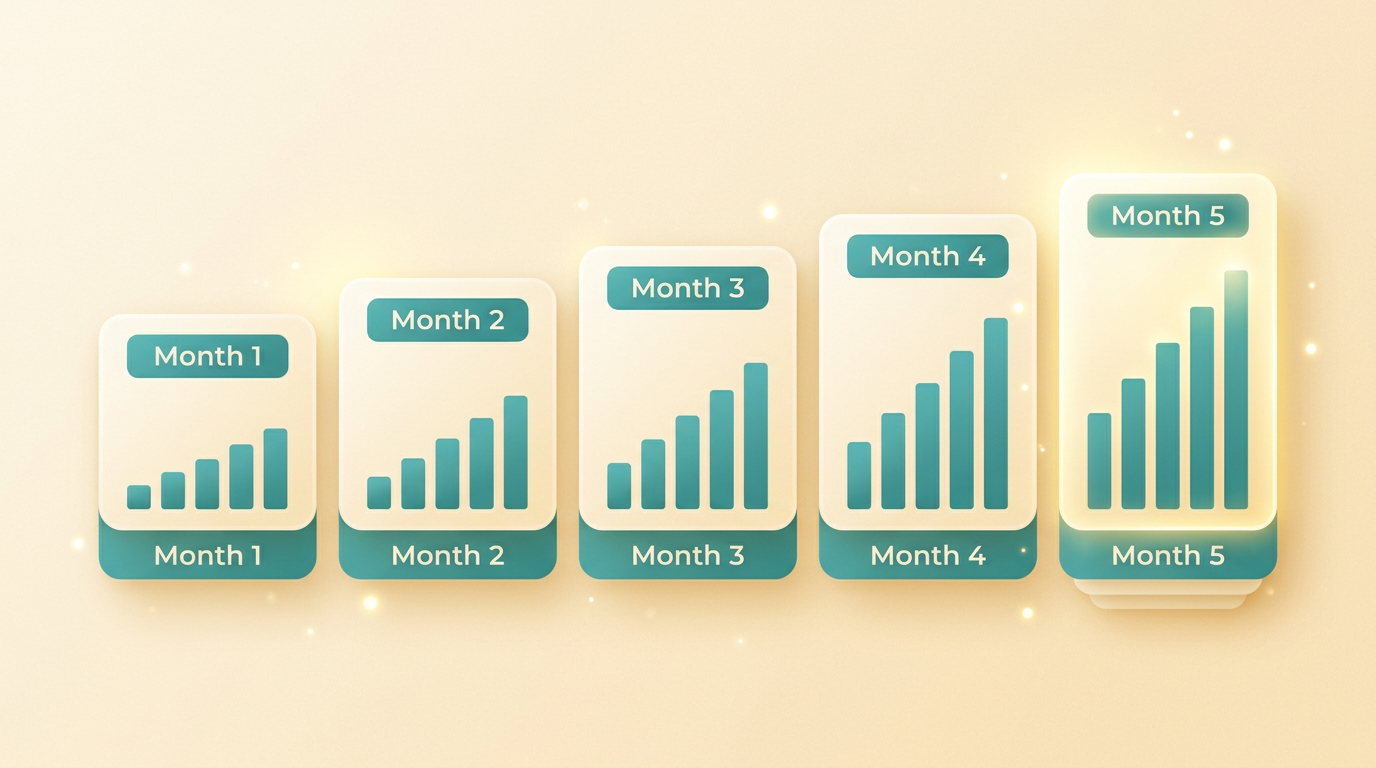
If you want to beat the February 2027 deadline and secure your grandfathered status, you must act systematically. Here is a month-by-month plan designed to take you from absolute beginner to monetized creator in five months.
Month 1: Choose Your Niche and Set Up Your Space
Your first thirty days are about establishing your foundation. A "niche" is simply the specific topic your channel will cover. Do not try to make a channel about everything. If you love gardening, cooking, and classic cars, pick just one. It is much easier to attract 1,000 loyal subscribers if they know exactly what kind of video you will post next.
Once you choose your topic, set up a free YouTube account. Spend one afternoon finding a quiet spot in your home with good natural light. Practice recording short, two-minute test videos on your phone. Do not worry about editing them yet. Just get comfortable looking at the camera lens and speaking as if you are talking to a friend sitting across the kitchen table from you.
Month 2: The Two-Videos-a-Week Habit
During your second month, your goal is to build consistency. Plan to upload two long-form videos every week. A good length for beginners is eight to twelve minutes.
When you record, skip the long introductions. Do not start your video by saying, "Welcome back to my channel, please subscribe." Viewers who do not know you will click away immediately. Instead, start with a direct hook. If your video is about fixing a leaky faucet, start by saying, "Today, I will show you how to stop your bathroom faucet from dripping in under ten minutes using tools you already own." This keeps the viewer watching, which builds your watch hours rapidly.
Month 3: Hooking the Viewer and Tracking Analytics
In month three, you will begin looking at your YouTube Studio dashboard. This is a free tool provided by YouTube that shows you how people are finding and watching your videos.
Pay close attention to your audience retention graph. This line shows you exactly when viewers are turning off your videos. If you notice a sharp drop at the three-minute mark, open that video and listen to what you were saying at that moment. Did you start repeating yourself? Did you stop showing the action? Use this data to make your next video more engaging.
This is also the month to set up your first affiliate accounts. Sign up for the Amazon Associates program, which is free and open to almost everyone. Start adding helpful links to the products you show in your videos directly into your descriptions.
Month 4: Utilizing Shorts for Growth
As you enter the fourth month, you will want to accelerate your subscriber growth. While long-form videos are best for building watch hours and affiliate revenue, short-form videos are excellent for reaching new people quickly.
Take the most exciting, funny, or educational thirty seconds from your existing long-form videos and upload them as Shorts. Aim to post three to five Shorts a week alongside your two regular videos. YouTube's algorithm distributes Shorts to people who have never heard of you. When they enjoy a Short, many will click through to your main channel and subscribe, helping you cross the 1,000-subscriber threshold.
Month 5: The Final Sprint and Submission
In your final thirty days leading up to February 1, 2027, review your progress daily. Keep your upload schedule consistent. If you are close to the 4,000 watch hour mark, consider hosting a live broadcast where you answer questions from your viewers in real-time. Live streams are an excellent way to accumulate hundreds of watch hours quickly because viewers often stay tuned for thirty minutes or an hour at a time.
As soon as your channel dashboard shows you have reached 1,000 subscribers and 4,000 watch hours, click the "Apply Now" button in the monetization tab. Complete the application immediately and accept the updated terms. Once approved, your channel will be safely grandfathered under the old rules before the February change takes effect.
Your First Action Steps
The clock is ticking toward February 1, 2027, but the worst action you can take is to freeze. You do not need to have everything figured out to begin. The most successful creators on the platform started with poor lighting, awkward camera presence, and no editing skills. They succeeded because they started and refused to quit.
Your retirement should be a time of active engagement, sharing your wisdom, and building new streams of security. YouTube offers a free platform to do exactly that, and the next five months represent a rare window to lock in your earning potential under easier rules.
Grab a piece of paper and a pen right now. Write down a list of ten common questions your friends, neighbors, or children have asked you about your favorite hobby or skill over the past year. Each of those ten questions is the title of your first ten videos. Once you have your list, pick the easiest question, set your smartphone on a shelf, and hit record.
Sources
- https://blog.youtube/news-and-events/youtube-partner-program-updates-2027-new-opportunities-earn/
- https://support.google.com/youtube/answer/12843009
- https://www.searchenginejournal.com/youtube-updates-partner-program-terms-shorts-payout-rules/585331/
- https://thumbmentor.com/en/blog/youtube-shorts-vs-long-form-monetization
- https://vidgrow.co/blog/youtube-0-to-1000-subscribers-2026/
- https://www.starnewskorea.com/en/star/2026/08/03/2026080308502584796
- https://www.linkedin.com/posts/healthybalancedliving_pats-sweet-sixties-activity-7448835324006346752-0ZBG